Author: yourohiohomebuyer

  • Selling a Fire-Damaged or As-Is House in Dayton

    Selling a Fire-Damaged or As-Is House in Dayton

    Fire, water from firefighting, smoke, and sudden vacancy can turn a normal house sale into a project overnight. Other Dayton owners are not coming from a fire at all—they simply have a house that needs too much work to show well: old roofs, dated systems, unfinished repairs, or years of deferred maintenance.

    If you have been searching phrases like “we buy fire damaged houses” or “selling a house as is,” this guide walks through practical options without sugarcoating the hard parts.

    Stock photo of a fire-damaged house exterior

    What “as-is” really means

    As-is means the buyer agrees to purchase the property in its present condition, without requiring you to complete repairs as a condition of the sale. You still need to be honest in required disclosures. As-is is not a license to hide known problems—it is an agreement that the buyer accepts the condition they are buying.

    As-is sales are common when:

    • The house needs major systems work
    • Clean-out would take months
    • Insurance or life events make a retail listing unrealistic
    • You want a simpler close instead of a remodel project

    Our situation page on selling a house as-is in Dayton covers the broader as-is path. Fire damage is one of the clearest as-is cases—see also sell a fire-damaged house in Dayton.

    After a fire: first priorities (before any sale talk)

    Safety and documentation come first:

    1. Do not re-enter until the fire department or your insurer says it is safe
    2. Call your insurance carrier and start a claim file if you have coverage
    3. Secure the property as directed—board-up, winterization, or fencing may be required
    4. Photograph and inventory what you can, for the claim and for your own records
    5. Talk with your mortgage servicer if you still have a loan—they will want to know about insurance proceeds
    6. Keep kids, pets, and valuables away from unstable areas and contaminated debris

    This article is educational only—not legal, insurance, or tax advice. A public adjuster, attorney, or your carrier’s assigned adjuster may be appropriate depending on the claim.

    Insurance, repairs, and the sale decision

    Some owners rebuild with insurance funds and stay. Some rebuild and then sell. Others sell the damaged property (and sometimes assign certain rights carefully with professional guidance) rather than manage a full reconstruction.

    Questions that shape the decision:

    • Is the structure a candidate for repair, or is demolition likely?
    • How long will permitting, contractors, and materials take?
    • Can you carry the mortgage, taxes, and insurance during a rebuild?
    • Do you still want to live there after the event?

    There is no single “correct” answer. There is only the path that matches your finances, energy, and timeline.

    Why retail listings struggle with fire or heavy as-is condition

    Traditional buyers often need lender financing. Lenders and appraisers can struggle with:

    • Active fire or smoke damage
    • Missing mechanicals
    • Safety hazards
    • Incomplete reconstructions

    Even cash retail buyers touring through the MLS may want deep discounts and long inspection periods. Showings can be limited by safety. Photos are hard to stage. The result is often a slow listing—or no listing at all—until the property is stabilized.

    That is why many owners look for buyers who specifically purchase fire-damaged and as-is houses.

    Dated kitchen interior that may sell as-is

    Cash sale vs. repairing first

    Repair or rebuild first can make sense when insurance strongly supports it, you want to return to the home, or a near-full retail sale is realistic after work.

    Sell as-is for cash can make sense when you want out of the project, holding costs are painful, the house is unsafe to show, or you would rather hand the reconstruction problem to a buyer who does that work regularly.

    A reputable cash buyer prices the risk: demolition unknowns, soot and odor remediation, structural questions, code upgrades, and carrying time. The offer will reflect that work. Compare it to the net after a rebuild—not to an undamaged neighbor’s list price.

    For how we think about numbers, see How We Calculate Our Cash Offer. To line cash against a hypothetical listing path, use the cash offer vs. listing calculator and our cash vs. realtor overview.

    Watch out for wholesalers on distressed deals

    Distressed properties attract middlemen. Some “buyers” only want to lock a contract and assign it. Ask who will be on the deed, whether they assign contracts, and whether they close at a local title company.

    Your Ohio Home Buyer never wholesales. We are a local Dayton company with a proven 10-year track record. We buy houses ourselves—including as-is and fire-damaged properties—and close through title.

    Tips for spotting reputable cash buyers also appear in How to Spot a Reputable Cash Home Buyer in Dayton and in How We Buy Houses.

    What you do not have to do before asking us for an offer

    You do not need to:

    • Finish remediation
    • Replace the roof or HVAC
    • Deep-clean smoke damage
    • Empty every room (take what you want to keep)
    • Pull permits for repairs you do not plan to complete

    Share what you know: claim status, board-up company, known structural notes, and access instructions. We can walk the property when it is safe to do so—or work from available information and a careful on-site visit.

    Other as-is situations we see in Dayton

    Fire is only one path into an as-is sale. Owners also come to us with:

    Same core idea: sell in today’s condition, on a clear timeline, without turning your life into a general-contractor job.

    How Your Ohio Home Buyer helps

    1. You call and describe the property and timing
    2. We review access and safety, then visit when appropriate
    3. You receive a written, no-obligation cash offer
    4. If you accept, we coordinate title and a closing date
    5. You remove personal items you want; we take the property as-is from there

    Read reviews, browse the FAQ, or learn about our company. If you also need estate-sale or move-management help for contents, see Trusted Local Partners.

    Ready for a no-obligation cash offer?

    If you need to sell a fire-damaged house—or any as-is Dayton property—call Your Ohio Home Buyer at (937) 860-2509. We never wholesale, we are local, and we have a proven track record over the last 10 years. Start here: Contact Us, sell a fire-damaged house, or sell as-is.

    Frequently Asked Questions

    Can I sell a fire-damaged house in Dayton without repairing it?

    Yes. Many fire-damaged homes sell as-is to cash buyers who can handle remediation or demolition. Retail financing buyers are harder when the house is unsafe or incomplete. Always handle insurance and safety steps first.

    Do I have to settle my insurance claim before selling?

    Not always, but the claim, mortgage company, and title company all need clear handling. Talk with your insurer and a closing professional about how proceeds and liens are treated before you sign a sale contract.

    Will a cash offer be lower because of the damage?

    Usually the price reflects repairs, risk, and time. Compare that offer to the net after a rebuild—including months of payments and project stress—not to an undamaged list price.

    Does Your Ohio Home Buyer buy as-is houses that were not in a fire?

    Yes. Fire damage is one situation we buy; we also buy houses with deferred maintenance, code issues, clean-out needs, and other as-is conditions across the Dayton area. We never wholesale.


  • Selling Your Dayton House by Owner vs. a Cash Buyer vs. Listing With an Agent

    Selling Your Dayton House by Owner vs. a Cash Buyer vs. Listing With an Agent

    “How do I sell a house by owner?” and “Can I sell my house on my own?” are two of the most common questions Dayton homeowners ask when life speeds up. The short answer: yes, you can sell on your own. Whether you should depends on time, condition, risk tolerance, and how much work you want to take on.

    This guide compares three real paths—for sale by owner (FSBO), listing with a real estate agent, and selling to a local cash buyer—in plain language so you can choose with eyes open.

    Suburban Dayton-area style home exterior at dusk

    Path 1: Selling by owner (FSBO)

    Selling by owner means you market the house, field calls and showings, negotiate, and shepherd the deal toward closing—usually without paying a listing commission.

    Where FSBO shines

    • You want maximum control over price and showings
    • The house shows well and needs little work
    • You already have a likely buyer (neighbor, friend, coworker)
    • You are comfortable with contracts, disclosures, and follow-up

    Where FSBO gets hard

    • Pricing takes research; overpricing can leave the house sitting
    • You handle photos, listing syndication, yard signs, and inquiries
    • Buyer agents may still expect compensation in many deals—plan for that in your net
    • Financing buyers bring appraisals, inspections, and underwriting delays
    • One weak disclosure or missed deadline can create stress late in the deal

    FSBO is not “free.” You trade commission savings for time, skill, and risk. Many owners do it successfully. Many others switch to an agent or a cash offer after a few quiet weeks.

    Path 2: Listing with a real estate agent

    An agent lists your home on the local MLS, markets it, manages showings, negotiates offers, and coordinates toward closing in exchange for a commission (structure varies by agreement).

    Where a listing shines

    • You want broad retail exposure and multiple offers when the market supports it
    • The house is close to retail-ready after cleanup or light updates
    • You prefer a professional buffer for negotiations and paperwork
    • You can wait through a normal marketing and closing timeline

    Where a listing costs more than the fee

    • Repairs, credits, and staging add up before you ever see net proceeds
    • Showings and lockboxes are inconvenient if the house is occupied—or empty and needing upkeep
    • Buyer financing can fall through after weeks of work
    • Your calendar is partly controlled by the buyer’s lender and inspector

    For a side-by-side mindset on cash vs. listing, see our cash offer vs. realtor guide for Dayton and try the cash offer vs. listing calculator.

    Path 3: Selling to a local cash buyer

    A cash buyer purchases the house as-is with cash or cash-equivalent funds. You typically skip repairs, showings, and financing contingencies. Closing happens at a title company on an agreed date.

    Where cash shines

    • The house needs work, cleanup, or both
    • You need a certain close date (job move, probate timeline, payment pressure)
    • You do not want strangers walking through
    • You would rather take a simpler net than manage a retail project

    Tradeoffs to accept up front

    • The offer is usually priced for as-is condition and speed—not a polished retail peak
    • You should still verify you are dealing with a real buyer, not a wholesaler shopping your contract

    Your Ohio Home Buyer never wholesales. We are a local Dayton company with a proven track record over the last 10 years. When we make an offer, we intend to buy the house ourselves. Learn how we buy houses and how we calculate our cash offer.

    House keys in the door at closing

    A simple way to choose

    Ask yourself four questions:

    1. How much time do I have? Weeks and months favor listing or a patient FSBO. Days or a fixed deadline often favor cash.
    2. What shape is the house in? Move-in ready supports FSBO or a listing. Heavy repairs, code issues, or fire damage often favor as-is cash—see selling a house as-is in Dayton.
    3. How much project management do I want? FSBO is a part-time job. An agent runs marketing. Cash minimizes the project.
    4. What net do I need? Compare apples to apples: list price minus repairs, commissions, concessions, holding costs, and risk of fall-through—not list price alone.

    There is no moral ranking. There is only fit.

    Hybrid approaches people use

    Some Dayton sellers:

    • Try FSBO for a short window, then list or take a cash offer
    • Get a cash offer first as a floor, then decide whether listing upside is worth the work
    • List only after finishing critical repairs—and sell as-is for cash if bids come in too low

    Getting a no-obligation cash number early does not lock you in. It gives you a baseline while you explore other options.

    Special situations

    Certain moments change the math:

    If you need related help (estate sales, senior move managers, and similar), our Trusted Local Partners page lists people we are glad to connect sellers with.

    How a cash offer from us works

    1. Tell us about the house and your timing
    2. We walk it (or arrange access)
    3. You receive a written, no-obligation offer
    4. If you accept, we open title and close on a date that works
    5. Take what you want; leave the rest when you sell as-is to us

    Questions we hear often are also on our FAQ. You can read reviews and learn about our company before you call.

    Ready to compare your numbers?

    If you have been asking whether you can sell your Dayton house on your own, you can—FSBO is a real option. So is an agent listing. So is a local cash sale. Call Your Ohio Home Buyer at (937) 860-2509 for a straight cash offer you can hold next to any other plan. We never wholesale, we are local, and we have been buying houses in the Dayton area for 10 years. Reach us anytime through Contact Us.

    Frequently Asked Questions

    Can I sell my Dayton house without a realtor?

    Yes. Ohio homeowners can sell by owner. You will still need proper contracts, disclosures, and usually a title or closing professional. Many sellers also talk with a cash buyer or an agent before deciding.

    Is FSBO always cheaper than using an agent?

    Not always. You may avoid a listing commission and still pay buyer-side compensation, repairs, staging, longer holding costs, or price reductions. Run a full net sheet either way.

    When is a cash buyer better than listing?

    When you need speed and certainty, the house needs substantial work, or you want to skip showings and financing risk. Listing can still win when the home is retail-ready and you can wait.

    Does Your Ohio Home Buyer pressure me to skip the listing route?

    No. We give a cash offer and explain the tradeoffs. Many people compare that number with an agent’s plan—or try FSBO first—then decide. We never wholesale, and we close only when you choose to move forward.

  • How to Spot a Reputable Cash Home Buyer in Dayton (and Avoid Wholesalers)

    How to Spot a Reputable Cash Home Buyer in Dayton (and Avoid Wholesalers)

    Searching for the “best companies that buy houses for cash” in Dayton turns up a lot of look-alike ads. Some are real local buyers. Some are wholesalers who never intend to close in their own name. A few are call centers that sit hundreds of miles away.

    If you need a fair cash sale—without repairs, showings, or weeks of “maybe”—it helps to know what a reputable buyer looks like before you sign anything.

    Handshake after agreeing on a home sale

    What a cash home buyer actually does

    A cash home buyer purchases your house with cash (or cash-equivalent funds), usually as-is. You skip listing photos, open houses, buyer financing contingencies, and most repair negotiations. Closing happens at a local title company on a date you agree to.

    That is different from:

    • A listing agent, who markets your home to retail buyers for a commission
    • A wholesaler, who locks up your house under contract and then tries to assign or flip that contract to someone else for a fee
    • A “we buy houses” lead company, which may only collect your info and sell the lead

    All three can sound similar on a postcard. The difference shows up in the paperwork and who shows up at closing.

    Wholesaling vs. buying: why it matters

    Wholesaling is legal in many situations, but it is not the same as buying your house. A wholesaler’s goal is often to control your property with a contract, then find an investor who will pay more than they offered you. You may wait longer, see the deal fall apart if they cannot find a buyer, or get pressure to lower the price again.

    A company that actually buys houses puts its own money (or its own financing) behind the offer, works with a title company, and closes in its own name—or a closely held entity it controls. You are not waiting for a mystery third party to appear.

    Your Ohio Home Buyer never wholesales. We are a local Dayton company with a proven track record over the last 10 years. When we make an offer, we intend to buy the house ourselves.

    Red flags when you are shopping cash buyers

    Use this checklist when someone contacts you—or when you call them:

    1. They will not put the buying company name in writing. Vague “our investors” language is a warning.
    2. The contract lets them assign freely with no notice. Assignment clauses are common in wholesale deals. Ask who will be on the deed.
    3. They push a same-day signature with no walkthrough notes. A serious buyer can move fast and still explain how they priced the offer.
    4. They disappear after you say yes. Radio silence after the contract is a classic wholesale stall while they shop your house.
    5. Out-of-state only phone numbers and no local presence. Remote teams can be fine for some services; for a house sale, you usually want someone who knows Dayton streets, title practices, and local contractors.
    6. The offer keeps changing with new “fees.” Earnest money, option fees, and closing credits should be clear up front—not invented a week before closing.
    7. No path to a real title company. Reputable deals close with a neutral title or escrow company, not a handshake in a parking lot.

    None of these alone proves a scam. Together, they tell you whether you are dealing with a buyer or a middleman.

    Green flags of a reputable Dayton cash buyer

    Look for the opposite pattern:

    • A clear company identity you can look up (site, reviews, local phone)
    • A written offer that states price, closing window, what stays with the house, and who pays typical closing costs
    • An explanation of the number—see how we think about pricing on How We Calculate Our Cash Offer
    • Willingness to close at a local title company
    • As-is language that matches reality—you should not be forced into surprise repairs after you already agreed to sell as-is
    • Local track record—years in the Dayton market, not a brand-new postcard
    • Straight talk about tradeoffs—cash often nets less than a perfect retail listing, and an honest buyer will say so; compare paths with our cash offer vs. listing calculator and our cash offer vs. realtor guide
    Well-kept suburban home exterior

    Questions worth asking before you sign

    Bring these to every conversation:

    • Will your company (or an entity you control) be the buyer on the deed?
    • Do you wholesale or assign contracts as a regular practice?
    • Who chooses the title company, and can I use one I trust?
    • What happens if an inspection finds issues—are we still as-is?
    • How long have you been buying houses in the Dayton area?
    • Can I see how you arrived at this number?

    Listen as much to how they answer as to the words. A reputable buyer is comfortable explaining the process. For our step-by-step, see How We Buy Houses.

    How Your Ohio Home Buyer works

    We are local. We buy houses in and around Dayton as-is—repairs, clutter, code issues, inherited properties, and tough timing included. We do not wholesale your contract to the highest bidder.

    Typical flow:

    1. You call or reach out and tell us about the house and your timeline
    2. We walk the property (or coordinate access if you are out of town)
    3. You get a written, no-obligation cash offer
    4. If you accept, we open title and pick a closing date that fits
    5. You take what you want; leave what you do not—clear-out after closing is on us when we buy as-is

    That same process supports families dealing with inherited houses, foreclosure pressure, and other situation pages on our site. More answers live on our FAQ and reviews pages. We also keep a Trusted Local Partners page for related professionals we are glad to point people toward.

    When a cash sale is (and is not) the right fit

    Cash is often a good fit when you need certainty, the house needs work, you do not want showings, or holding costs are adding up. Listing with an agent can still make sense when the house is retail-ready, you have time, and you want to chase top market price.

    There is no prize for picking the “wrong” channel—only a better or worse match for your goals. A reputable cash buyer will not pretend otherwise.

    Ready for a straight answer?

    If you have been searching for reputable companies that buy houses for cash in Dayton, call Your Ohio Home Buyer at (937) 860-2509. We are a local company, we never wholesale, and we have been doing this work for families across the Dayton area for 10 years. Start at Contact Us or learn more about our company.

    Frequently Asked Questions

    How do I know if a cash buyer is a wholesaler?

    Ask who will be named as the buyer on the deed and whether they assign contracts. If they talk mostly about “finding an investor” or need a long option period with easy assignment rights, you are likely talking to a wholesaler—not an end buyer.

    Is selling to a cash buyer safe in Dayton?

    It can be, when you use a reputable local buyer, a written contract, and a neutral title company. Avoid pressure tactics, unexplained fee changes, and anyone who will not identify the buying entity.

    Will I get less money with a cash offer than listing?

    Often the headline cash number is lower than a perfect retail list price, because the buyer takes on repairs, risk, and speed. Compare net proceeds—not just list price—using tools like our cash offer vs. listing calculator.

    Does Your Ohio Home Buyer wholesale houses?

    No. We buy houses ourselves. We are a local Dayton company with a proven 10-year track record, and we close through title like any other serious purchase.

  • Selling an Inherited House in Dayton, Ohio: Probate Basics and Your Options

    Selling an Inherited House in Dayton, Ohio: Probate Basics and Your Options

    Losing a parent or relative is hard enough. Inheriting their Dayton house often adds a second job: paperwork, bills on an empty home, a lawn to keep up, boxes of belongings, and family members who may not all want the same thing.

    This guide covers Ohio probate basics in plain English, what to do with the house, and how a cash sale compares with listing. It is educational only—not legal or tax advice. Talk with a probate attorney (and a tax professional for money questions) about your situation.

    Who can sell the house?

    Before anyone closes, the person signing the deed needs clear authority. In Ohio that usually means one of these paths:

    • A court-appointed executor or administrator. If a will names an executor, or the court appoints an administrator, that fiduciary often handles the sale.
    • Power to sell in the will. When a will authorizes the executor to sell real estate, Ohio law generally lets that sale move forward without a separate court order for the sale itself, unless the will limits that power (see Ohio Revised Code § 2113.39).
    • Court authority when needed. If there is no sale power—or the estate needs court involvement—the fiduciary may need probate-court authority before selling.
    • Title already outside full probate. Some houses do not need a full estate administration just for the real estate. Common examples: a Transfer on Death (TOD) designation recorded before death, certain heir affidavits when the owner died without a will, or a survivorship deed for a co-owner.

    A probate attorney and a local title company will tell you which path fits your paperwork.

    Certificate of Transfer, affidavits, and TOD

    Heirs often hear a few document names. Here is what they generally mean:

    Certificate of Transfer

    A Certificate of Transfer is issued by the probate court to move a decedent’s real estate into the names of the people who inherit it (Ohio Revised Code § 2113.61). After the court issues it, it is typically presented to the auditor and then recorded. Ohio Legal Help notes that in some cases you may need to wait about six months after the date of death before applying; your attorney will know whether that wait applies to you.

    Affidavit when someone dies without a will

    If the owner died intestate (without a will), Ohio law allows an affidavit that identifies the decedent, date of death, heirs, relationships, and each heir’s share, usually with a certified death certificate. That affidavit can update real estate records when the situation fits the statute. It is not a shortcut for every estate, and an incomplete heirs list can create title problems later.

    Transfer on Death designation

    If the owner recorded a Transfer on Death Designation Affidavit before death (Ohio Revised Code § 5302.22), title can pass to the named beneficiaries after death. Beneficiaries typically file an affidavit of confirmation with a certified death certificate so the records catch up. Other estate assets may still need probate even when the house does not.

    Bottom line: Bring the deed, death certificate, will (if any), and any TOD paperwork to a probate attorney early. Guessing the wrong form usually costs more time than asking.

    Timeline and what to do while you wait

    There is no single Ohio clock for every inherited house. Timing depends on whether a will exists, whether an estate must be opened, how quickly heirs agree, creditor issues, and the court and title company calendars.

    While paperwork moves, you can still:

    • Keep utilities and insurance in place (vacant homes can be harder to insure)
    • Stay current on property taxes when possible
    • Decide whether you will list, sell as-is for cash, keep, or rent
    • Gather keys, codes, and a simple list of known repairs

    If you want a cash path, we can often work alongside your attorney’s timeline. Closing still waits until title can transfer cleanly.

    What to do with the house

    Most Dayton heirs choose one of four options: keep it, list it for retail buyers, sell as-is for cash, or pause and protect the property while decisions catch up. Listing can make sense when the house is in good shape and the heirs have time. A cash sale tends to fit when the house needs work, holding costs add up, or family members want a simpler close.

    Dated kitchen with original wood cabinets
    An older kitchen with original cabinets.

    Walk the house once with a notebook. Note roof leaks, basement water, furnace age, and anything unsafe. You do not need contractor bids to ask us for an offer.

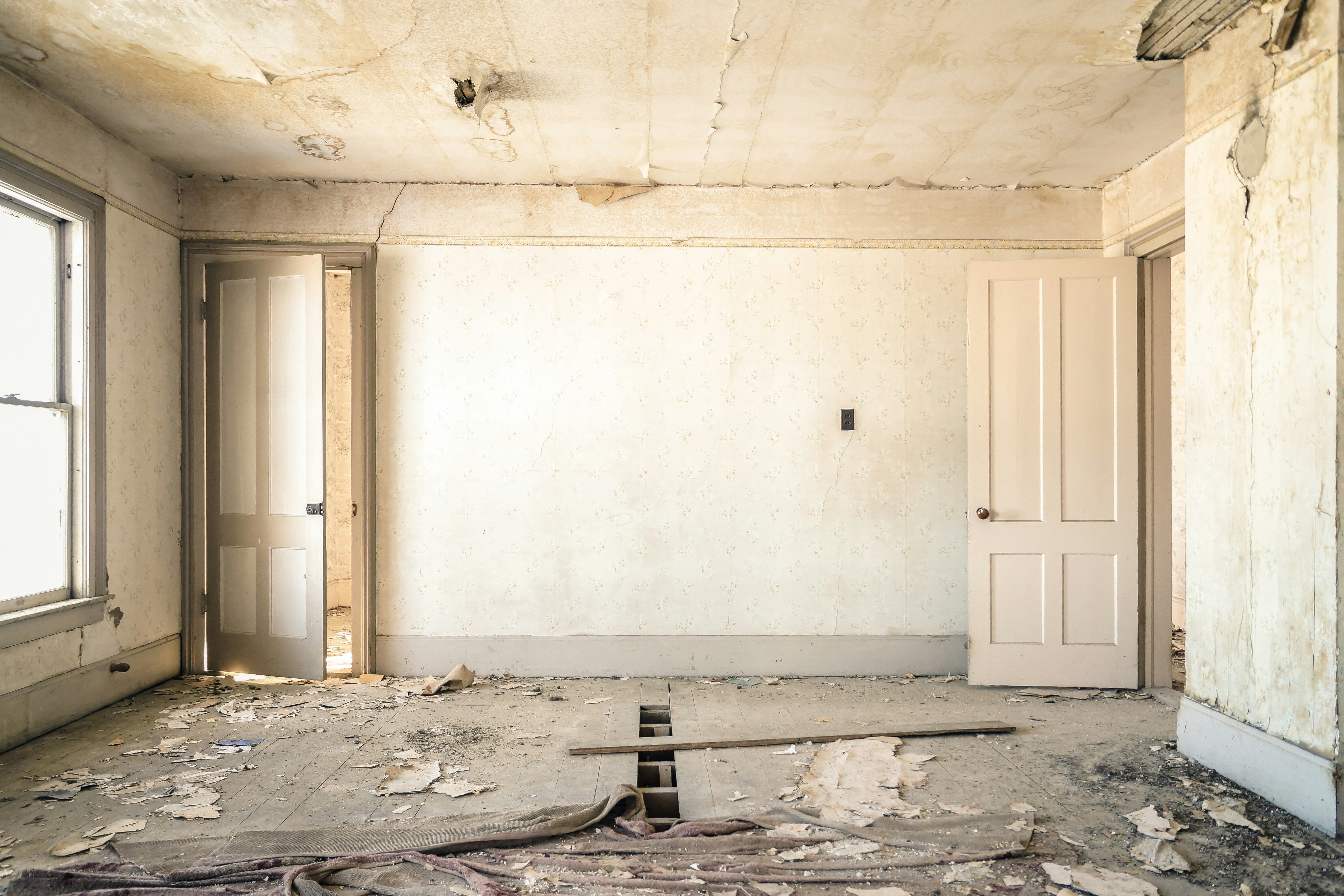
    Room with peeling wallpaper and damaged flooring
    A house needing repairs may still be sold as-is.

    Belongings

    Sorting a lifetime of furniture and papers can take months, especially from out of state. Pull photos, documents, and keepsakes first. Agree in writing on large items anyone wants. If you sell to us as-is, take what you want and leave the rest—after closing, clearing the house becomes our job. You do not need a dumpster or an estate sale before asking for an offer.

    Moving boxes and furniture in a lived-in home
    Furniture and belongings can take time to sort.

    Taxes in plain language

    Under federal rules, inherited real estate often receives a stepped-up basis—generally fair market value on the date of death (or an alternate valuation date in limited estate-tax cases). Taxable gain on a later sale is usually based on that new basis, not what your relative originally paid. A date-of-death appraisal or probate inventory value can help document that number. Exceptions exist, so confirm details with a CPA or tax attorney. We are not tax advisors.

    Cash sale vs. listing

    A traditional listing can bring a higher retail price when the house is ready and you can wait. It also usually means repairs or credits, cleaning, photos, showings, buyer financing, appraisals, commissions, and the risk a deal falls through.

    A cash offer trades some retail upside for speed and certainty: skip repairs and showings, avoid yard signs, pick a closing date that fits the estate, and work with the title company and your attorney on the probate pieces.

    For a quick net-proceeds comparison, try our cash offer vs. listing calculator. For the process we use with Dayton families, see Sell an Inherited House in Dayton, OH. More answers live on our FAQ page.

    How Your Ohio Home Buyer helps

    We buy Dayton-area houses as-is. For inherited properties we talk through where the estate stands, walk the house (or coordinate access if you are out of town), give a written no-obligation cash offer, and close at a local title company once authority and title are clear. Call (937) 860-2509 when you are ready.

    Not legal advice

    This article explains common Ohio concepts in everyday language. It is not legal advice, not tax advice, and not a substitute for a probate attorney. Laws and recording practices can change, and small facts in your deed or will can change the path. Please talk with a licensed Ohio probate attorney before you sign anything.

    Ready for a no-obligation cash offer?

    Inherited a Dayton house and want a straight answer on a cash sale? Call Your Ohio Home Buyer at (937) 860-2509, or start here: Sell an Inherited House in Dayton, OH.

    Frequently Asked Questions

    Can I sell an inherited house in Dayton before probate is finished?

    Often yes, once the right person has authority to sign. In Ohio that may be an executor or administrator appointed by the probate court, or in some cases heirs after title is transferred by a Certificate of Transfer or another allowed affidavit. Your probate attorney and title company confirm what is needed for a clean closing.

    What is a Certificate of Transfer for Ohio real estate?

    A Certificate of Transfer is a probate-court document that transfers ownership of a decedent’s real estate to the people who inherit it. After the court issues it, it is typically taken to the auditor and then recorded so the new owners appear in the public records. Whether this is the right path depends on the estate.

    Do I have to empty and repair an inherited Dayton house before selling?

    Not if you sell as-is to a cash buyer. Take what you want to keep, and leave the rest. A traditional listing usually expects cleaning, repairs, photos, and showings, which can add cost and delay for an estate.

    How does the stepped-up tax basis work on an inherited house?

    Under federal tax rules, inherited real estate often receives a basis equal to fair market value on the date of death (or an alternate valuation date in limited estate-tax cases). That can reduce taxable gain if you sell near that value. Keep appraisal or inventory records, and confirm details with a tax professional.

    What if several heirs inherited the same Dayton house?

    Usually everyone with an ownership interest, or the court-appointed fiduciary with authority to sell, must agree on the path forward. Title companies look for clear authority and signatures. Early conversations—and a probate attorney when needed—help avoid delays at closing.